
01. Choosing The Right Cars
Let’s assume you will be buying 2 cars.
One Economy, and another Aged-Premium.
To start calculating your TURO earnings, we will need to make some assumptions!
Let’s assume that you will be buying 2 cars to begin with. One Economy vehicle and one Aged-Premium vehicle, to diversify your portfolio. We will base these assumptions based on the real vehicles we actually purchased on June of 2025, and how they actually performed on our TURO Hosting account!
Our Two Target Vehicles
The first step into a successful TURO hosting, is to choose the right vehicles that will perform the best in your region. Our research suggests that within Orlando, FL region, (1) Economy Cars, (2) Convertibles, and (3) 7-Seats + SUV/Minivans are always in high-demand. We chose to add an economy car, and a premium convertible into our fleet.
2017 Chevrolet Cruze LS
Economy
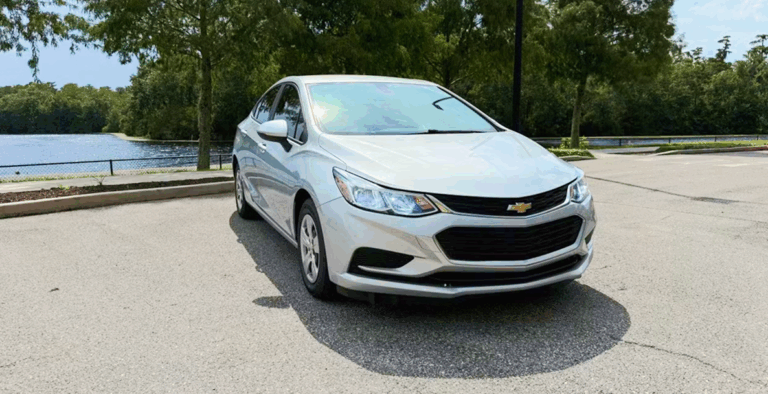
Vehicle Price:
$6,200
2015 Audi A3 Convertible
Aged-Premium
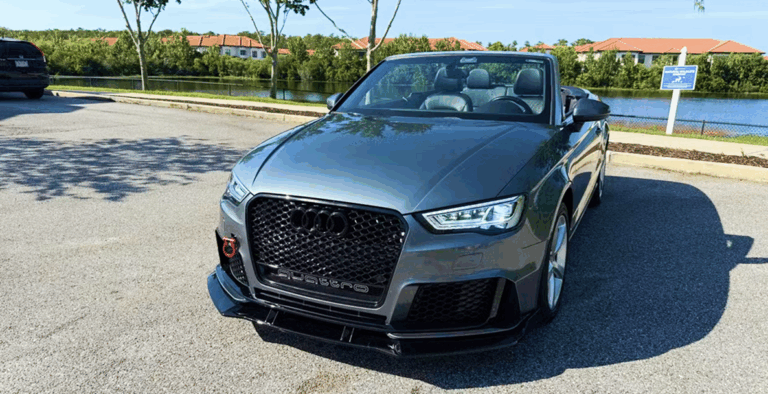
Vehicle Price:
$12,475
As soon as our vehicle type and budget were set, we looked around on various places (car listing platforms, Facebook Marketplace, Auto Auctions, etc.) to narrow down our options. In the end, we were able to find the two vehicles (2017 Chevy Cruze & 2015 Audi A3) that fit our criteria, and we reached out to the dealers to negotiate on the pricing before visiting the dealership.
02. Initial Costs
You’ve decided on what cars to get.
Now let’s see how much you need to pay.
*We actually purchased the two cars with full cash payment, without any financing leverage. However, we will be assuming that we have financed the vehicle purchase for the sake of the profitability calculation.
(A) Vehicle Purchase Costs
When purchasing a vehicle, you have to account for various related-expenses, such as sales tax, registration fee, and dealer fees. We broke down the realistic cost structures here, so you can get an accurate estimate of the true cost to purchase a vehicle.
Vehicle Price
This is pretty obvious. It’s the price tag on the car, before adding any other taxes or fees.
Dealer Fee
Most of the used-car dealerships, add hidden “Dealer Fee” on top of the vehicle price.
Sales Tax
Many states require you to pay state sales tax, when purchasing a vehicle. Rates vary by each states.
Registration Fee
You will also have to pay for registration fee, when purchasing a vehicle.
Title Transfer Fee
You will need to pay a very small amount (usually under $100) to transfer the title to your name.
Gap Insurance
Gap coverage is crucial, if you’re financing. You can pay one-time fee of $200 ~ $700 to the lender/ dealership.
(B) Reconditioning Costs
Just because you bought a vehicle, that doesn’t mean it’s fully ready to be rented out on TURO. You will need to inspect and repair mechanical damages and leakage, bring the car up to proper maintenance, and most importantly, restore and detail the car back to its mint condition.
Detailing & Car Wash
Unless the car comes squeaky clean from the dealership, you will most likely need to detail and wash the car.
Interior Restoration
If there are too many visible scratches and/or damages in the interior, you will want to repair them before renting it out.
Inspection
Unless you buy a new car, you will always need to get your car inspected by a reputable mechanic.
Fluid Maintenance
Make sure your engine oils and other fluids (i.e. transmission oil, differential oil, etc.) are up to the maintenance schedule.
Tires
Never rent out a car with damaged or worn out tires. Inspect to see how old the tires are and how much tread is available.
Brakes & Rotors
Another critical component of your car, where you never want to miss the maintenance schedule. Keep them fresh and new.
Mechanical Repairs
If your car is leaking or is experiencing mechanical failures, you will need to repair them before renting it out.
Actual Total Costs
Now that we have classified the various costs that are associated with buying a vehicle for TURO rental, let’s apply the theory in real life. For better accuracy, we are applying the actual cost figures that were incurred throughout our purchasing & reconditioning phase.
Please note that we are approved for Florida’s Sales Tax exemption1 status, and that you will most likely have to pay around 6% of sales tax on top of your purchase price. We have also applied a reasonable estimate for the cost of gap insurance2, as we did not finance to purchase the two vehicles.
2017 Chevrolet Cruze LS
Economy
2015 Audi A3 Convertible
Aged-Premium
At the end of the day, the total cost to acquire the two vehicles came out to be:
(1) 2017 Chevrolet Cruze LS – $7,200
(2) 2015 Audi A3 Convertible – $13,675
Now that we got the cost down, let’s move on to financing the vehicle purchase!
03. Auto-Financing
Let’s finance your purchase.
Just 10% down, leverage the rest!
Every person will be offered different rates and terms, depending on their credit history.
We are applying 8.5% as the auto-loan interest rate to make conservative assumption, but please note that 8.5% is NOT a competitive rate, and that you should aim anywhere between 4~6%, depending on your credit history and market condition. No matter what happens, try your best to NOT accept any rates higher than 10%!
In addition, we highly advise you to put minimum of 10% as a down payment, to ensure that your monthly expenses will not exceed your monthly earnings.
Auto-Loan Calculator
With just 10% down, your monthly payment will be:
(1) 2017 Chevrolet Cruze LS – $115/mo
(2) 2015 Audi A3 Convertible – $219/mo
2017 Chevrolet Cruze LS
Economy
2015 Audi A3 Convertible
Aged-Premium
You may be worried that the loan length of 72 months (6 years) is too long, but we urge you NOT to worry about this length, at least for TURO hosting.
A car that gets commercially rented out on TURO, will most likely be involved in a total-loss accident within the first 3~5 years, and has a very slim chance to reach the full maturity of your auto-loan.
And you may be thinking, ‘that’s terrible!’, but it’s exactly the opposite! We actually want the car to be totaled from an accident, and let us tell you why:
(1) Your car value is fully protected by TURO’s protection plan, with only $250 deductible.
(2) Your car will also be covered with Gap Insurance, and you will never have to worry about negative equity.
(3) TURO’s insurance pays out VERY WELL, and assesses higher vehicle market value than most of the big insurance companies.
(4) After couple years, the maintenance cost of your car will get higher, and you will want to decommission the car and liquidate it anyways.
(5) Unless your car is fairly new (under 5 years of vehicle age), TURO’s insurance payout will ALWAYS be higher than the amount you would get by selling the vehicle to 3rd parties.
At the end of the day, as a TURO host, your real intention is never actually maturing your loan for the full 72 months.
You are betting on the statistical fact that the car will most likely be totaled in the midway, and you will be closing out on your loan with the insurance payout before the full maturity. By lengthening the loan term, you are strategically lowering the fixed monthly expense to enjoy the better cash-flow.
This is the hidden art of leveraging TURO fleet with auto-loans, and you will be able to maximize your ROI, by just placing 10% as a down payment.
*And if your car actually survives the whole 72 months on TURO by some miracle (again, highly unlikely to happen), then you’re also in good luck!
You’ve built 100% equity on your car, and you get to decide whether you want to keep enjoying the high profit (without any monthly payment) or simply liquidate the car and receive your equity value!
04. Rental Revenue
You have two cars now, let’s start earning rental profit!
Now that you’ve bought your two vehicles and reconditioned it to their prime state, it’s time to put them on the TURO and start earning money while you sleep!
For hyper-realism, we will use our actual revenue data for the two vehicles, to accurately project the rental revenues they will be generating.
Average Rental Revenue
Here’s the breakdown of how much rental revenue you will be able to enjoy for each of the two cars, based on our actual revenue data on our TURO account:
If you have other specific cars in mind, TURO provides an official profit calculator and annual earnings data for various vehicle makes/models on their website, so use this valuable resources to your advantage:


2017 Chevrolet Cruze LS
Economy
2015 Audi A3 Convertible
Aged-Premium
The revenue amounts shown above, are the final earnings that you get from TURO, after TURO deducts the platform fee (25%) and other applicable taxes (sales tax, rental surcharge tax, etc.).
*You may decrease the platform fee to all the way down 10%, but this equally increases the coverage deductible to $2,500 (from just $250).
We never recommend taking such high amount of risks just for a mere 15% fee deduction, unless your vehicle value is above $80,000 and average monthly rental revenue is above $5,000. Unless your vehicle qualifies for the criteria, we highly suggest you to stay with the 25% TURO plan, or a single bad accident can wipe out 3~4 months worth of revenues.
This means, if you were self-hosting on TURO (you do all the labors to run the rental operation by yourself) you would have earned:
Chevrolet Cruze LS:
– $7,644 every year (1,062% of the $720 of initial investment).
– $637 every month (89% of the $720 of initial investment).
Audi A3 Convertible:
– $10,032 every year (733% of the $1,368 of initial investment).
– $836 every month (61.1% of the $1,368 of initial investment).
Two Cars Combined:
– $17,676 every year (847% of the $2,088 of initial investment).
– $1,473 every month (71% of the $2,088 of initial investment).
Extremely lucrative profit, considering you only had to put down about $2,000 as the initial investment. But don’t get too excited yet. We still haven’t covered any of the direct expenses, such as maintenance and insurance. This will be covered in great details in the next section.
05. Operating Expenses
What are the expenses? And exactly how much?
So far, we’ve only been covering the costs to buy the vehicles, and how much you will be earning from TURO.
In this section, we will dive deep into all kinds of expenses you should expect to rent your car on TURO, and exactly how much they will be costing you.
For accuracy, we will be using our actual expense data from operating and maintaining the two vehicles.
(A) General Vehicle Expenses
Whether your car is a personal one or gets rented out on TURO, any cars will incur various expenses throughout the ownership, including the following:
Maintenance & Repairs
Quite an obvious expense category for owning a car. Your car will need regular maintenance repairs.
Auto Insurance
Every car needs to be insured by law. As TURO rental is a commercial activity, you must get a commercial auto insurance.
Registration Renewal
Almost all States require yearly registration renewal. You will have to pay for the renewal on yearly basis.
State Inspection
States like California or Virginia will require yearly inspections, along with emissions tests. This is a cost that must be considered.
(B) TURO Operational Expenses
Other than the general vehicle expenses, there are other business related expenses you will need to account for, if you are renting your car out on TURO:
Parking Lot Lease
Unless you live on a big land, you will most likely need to find a dedicated parking space to store your car for TURO operation.
Airport Delivery
You must offer airport delivery to optimize your revenue. You will need to account for round-trip Uber/Lyft and parking costs.
Car Wash
Car Wash is the essence of TURO operation. You will need to do it yourself, subscribe to automated carwash, or pay someone.
GPS Telematics Device
It’s crucial to install a GPS Telematics device on your car, to protect from theft. You pay for a device, and monthly fees.
TURO Inspection
TURO requires yearly inspections for each car, from ASE certified mechanics. This will be an added cost.
Expense Calculator
Let’s dive deep into each of the expense category, and how much you should expect to pay. We are going to skip explanations on obvious expense categories like registration renewal:
Straightforward Expense Categories:
- Registration Renewal
- State Required Inspections (+ Emissions Test)
Other Expense Categories:
- Maintenance & Repairs – $800/year
You should expect around $800 of yearly maintenance & repairs fee. Of course the number will be different depending on your car brand and year (European luxury brands will cost more, and older vehicles will need more frequent repairs). But from our own experience, $800 per year in average, is plenty of budget to handle most of the common used-cars that can be rented out on TURO. Do note that $800/year is just an average. On some good years, your car will stay significantly under the budget, and on some bad years, your car may exceed the budget. - Commercial Auto Insurance – $60/month ($720/year)
As renting your car out on TURO is a commercial activity, you will need a commercial auto-coverage instead of a regular personal auto insurance from companies like Geico or Progressive. Our commercial auto insurance costs only $60/month for each vehicle, regardless of the vehicle’s make/model or the current market value. - Airport Parking Lot Lease – $110/month ($1,320/year)
If you want to optimize your revenue and vehicle utilization rate, it’s quintessential to provide free airport delivery option to your TURO guests. And unless you live 10 minutes away from the airport with a big lot to store your cars, you will most likely need to find a monthly airport parking lease. For us, we pay about $110/month for each vehicle, for unlimited parking that’s 5 minutes away from the Orlando MCO airport. - Airport Delivery – ??/month (entirely depends on your situation)
When you offer airport delivery service for your TURO guests, you also need to account for the round-trip transportation costs (Uber/Lyft/Taxi) and the airport parking fees. For us, our parking lease includes 24/7 unlimited shuttle service to the Orlando MCO airport, so our cost to operate airport delivery comes out to $0. Keep in mind, that if you live far away from the airport, your back-and-forth Uber cost will be quite high. - Car Wash – ??/month (entirely depends on your situation)
Unless you plan on hand-washing your entire car for every trip (trust us, it’s a brutal amount of labor), you will need to at least subscribe to the automated car-wash machines and hand-clean the interior yourself. Generally speaking, a monthly car-wash subscription costs anywhere around $15~$30 per month for each vehicle. We work wash our cars on our own, so we will mark it as $0 for the expense. - GPS Telematics Device – $90 device + $9/month
We use a device called “Bouncie” to track the location & status of all of our vehicles. The device costs around $90 to purchase, and a monthly subscription of $9 is incurred for each vehicle. Never skip on this step, as GPS Telematics devices have proven to be valuable on so many cases while running our TURO fleet (if you guest refuses to return your vehicle, you need to be able to repo it back). - TURO Annual Inspections – $30/year
TURO requires an inspection completed by ASE Certified technicians every year, for each of the cars that’s listed on TURO platform. Depending on your relationship with auto-shops, your cost will vary anywhere between $30 to $75 per inspections. For us, we only pay about $30 for each inspections because we have good relationships with auto shops.
Now that you have the general sense of all the expenses that’s required to run a TURO rental car, let’s actually plug in the numbers for each year of operation. Keep in mind, that depending on the Co-Hosting plans you choose, we co-pay a certain percentage of your vehicle expenses, lessening the burden from your end.
2017 Chevrolet Cruze LS
Economy
2015 Audi A3 Convertible
Aged-Premium
Note that the costs stay identical for both of the cars, as we repair and maintain our vehicles ourselves (we pay the same labor hours for all cars, regardless of the car’s brand. Affordable OEM parts can also be easily purchased online). If you decide to take the cars to official dealerships for repairs and maintenance (which we strongly advise against, unless it’s covered under warranty), the general expenses for premium vehicles will obviously be higher.
Fleeteer’s Co-Pay Benefit: Depending on the Co-Hosting plans you choose, we pay a portion of the expenses together.
- Up to 30% of maintenance & repair costs, after deductible
This is to protect our investors from catastrophic financial risk associated with their vehicle. If it comes to a point where a repair cost exceeds $1,000, Fleeteer will co-pay the expense that exceeds the deductible amount. - Up to 10% of insurance and parking lease
This is to alleviate the investor’s pressure on the fixed expenses that account for the majority of the costs. We enjoy the revenues together, so we should also share the expenses together.
06. Cash Flow
We know the revenues and expenses.
Let’s calculate your cash flow!
You now have a clear understanding of how much revenue you’ll get for each cars, and how much expense you’ll be paying out, including your monthly loan payment.
Let’s use this information to calculate your net cash flow!
For this section, we will completely disregard the (1) remaining loan value and (2) depreciation/value of your car, and focus strictly on the cash-flow aspect of your TURO hosting. The comprehensive portfolio valuation that includes your vehicle value, equity, and net profit – will be covered deeply in the next section.
The Cash-Flow Formula:
+
Rental Revenue
How much earnings did you get from renting out your car on TURO? (After fees & taxes)
–
Operational Expense
How much did you spend, to maintain and operate your car as a TURO rental fleet?
–
Loan Payment
How much did you pay, as the loan repayment? (Including interest & principal)
=
Cash Flow
How much cash is left for you, after taking all the expenses & payments out?
Actual Cash Flow
Let’s plug in some real numbers into our formula:
2017 Chevrolet Cruze LS
Economy
2015 Audi A3 Convertible
Aged-Premium
This means, if you were self-hosting on TURO (you do all the labors to run the rental operation by yourself) you would have earned the following cash-flow, after deducting all kinds of expenses and loan payments:
Chevrolet Cruze LS:
– $3,251 every year (452% of the $720 of initial investment).
– $271 every month (33% of the $720 of initial investment).
Audi A3 Convertible:
– $4,395 every year (27% of the $1,368 of initial investment).
– $366 every month (321% of the $1,368 of initial investment).
Two Cars Combined:
– $7,646 every year (366% of the $2,088 of initial investment).
– $637 every month (31% of the $2,088 of initial investment).
In summary, just with about $2,000 of initial investment as the 10% down-payment for the two cars, you will get to enjoy $637 every month ($7,646 every year) in pure cash, even after deducting every expenses and loan payments!
You can safely estimate around 3~4 months, for you to be able to recover all of the $2,088 of investment you initially put in, meaning any earnings after that period, will count as your pure cash-profit.
For people who are currently paying monthly rent or mortgages (or even personal car payments), this amount can make a huge difference in their day-to-day lifestyle. And if you want to make a full-time living from of the TURO earnings, all you have to do is scale the number of your fleet!
*If you have 20 of the same two vehicles, then you would have needed to invest just $20,880 as down payment, and enjoy $6,370/mo, or $76,460/yr! Now tell us if Airbnb or real-estate investment can even come close to these profitability figures with the same amount of investment!
07. Net-Profit & Investment Portfolio
Good cash flow from TURO!
But how about my portfolio value & net profit?
Although we’ve calculated the net cash-flow you’ll be enjoying for every month, we never calculated for the entire value of your portfolio.
The cash flow we covered above is about “how much cash you can earn from TURO hosting,” but it doesn’t account for the physical asset value and the depreciation of your vehicles.
Remember, you’ve been paying monthly car payments, and you’ve built equity on the value of your cars. You can always sell your vehicles and liquidate your TURO portfolio, which will be the final asset value or wealth you’ve built through hosting on TURO.
TURO Investment Portfolio
This is how you calculate the total value of your TURO portfolio.
+
Cash Asset
This refers to the total amount of cash earnings you’ve collected from TURO, after deducting all expenses and loan payments.
+
Vehicle Equity
This refers to the total monetary value of your vehicle, that you will be able to collect after paying off your existing loan balance.
=
Net Portfolio Value
The total monetary value of your TURO investment, including the cash earnings and the equity value of your vehicle.
Vehicle Equity
And this is how you calculate your equity value, you have on your vehicle. Basically, it is the total amount of money you will be left with, after selling off your vehicle (or get insurance payout) and paying off the remaining loan balance you have.
+
Vehicle Purchase Price
The price of the vehicle at the time of your purchase, is the initial value of your vehicle asset.
–
Depreciation
Over the time, the market value of your vehicle will most likely have depreciated.
–
Loan Balance
If you’ve financed your vehicle, you will have to pay the remaining balance of your loan when you sell the car.
=
Vehicle Equity
This is the final amount of money you will be left with, after deducting depreciation and loan payment.
4 YR Portfolio Projection
For the final part of assessing your TURO profitability, we will look at the net portfolio value and your true net-profit.
As for the length of your TURO investment, we advise you to keep the car for about 3~5 years to best maximize your profit, as (1) rental fleet cars will add miles (around 15,000~20,000 miles per year) more quickly than personally driven cars, and (2) the maintenance can become more frequent and expensive as the car gets older, especially if the car is reaching towards (or beyond) 100k mileage.
For this calculation, we will pick the middle ground and assume that you’ll want to keep your car on TURO for 4 years.
2017 Chevrolet Cruze LS
Economy
2015 Audi A3 Convertible
Aged-Premium
For both of the vehicles combined, your initial investment of $2,088 will grow to a total value of $40,994 by the end of 4 year, with total of 1,863% of ROI and annual compounded growth rate of 110.5%/yr.
As a reference, the S&P 500 is widely considered to be the gold standard of US investment market performance, with the average compounded rate of return of 10.4%/yr.
Your TURO investment portfolio for the two cars (110.5%/yr), will be significantly outperforming S&P 500 by 11x multiples.
TURO Calculator
Too complicated?
No worries!
Try our TURO profit calculator.
Too complicated? No worries!
Try our TURO profit calculator.
The financial concepts to truly understand the profitability of TURO hosting, can be a little too complicated for many people. Monthly payments, depreciation, vehicle equity, etc. – are all very important parts of the TURO investment that can be confusing.
So we made our own calculator for this. And we can say that ours is one of the most advanced TURO calculator that’s currently accessible for the public, and you will not be disappointed.
We will tell you all about the cash-flow and the net-profit, and also give you a fair warning if your investment scenario will become a risky one.
The financial concepts to truly understand the profitability of TURO hosting, can be a little too complicated for many people. Monthly payments, depreciation, vehicle equity, etc. – are all very important parts of the TURO investment that can be confusing.
So we made our own calculator for this. And we can say that ours is one of the most advanced TURO calculator that’s currently accessible for the public, and you will not be disappointed.
We will tell you all about the cash-flow and the net-profit, and also give you a fair warning if your investment scenario will become a risky one.
Want to plug in your own numbers
and see if it makes sense?
Want to plug in your own
numbers and see if it
makes sense?